When in the 19th century was it the best time for John Walker to go to prison? This enquiry uses the power of the personal story to engage your classes. We look at the case of John Walker, who was found guilty of stealing onions. Your students start by drawing[…]
Did anyone really bother to enforce the law properly 1700-1900? This enquiry starts with the fascinating story of Jonathan Wild – the self-named Thief Taker General who ran a massive network of thieves, had some of them tried and executed, and advised the government on crime prevention! Now that is[…]
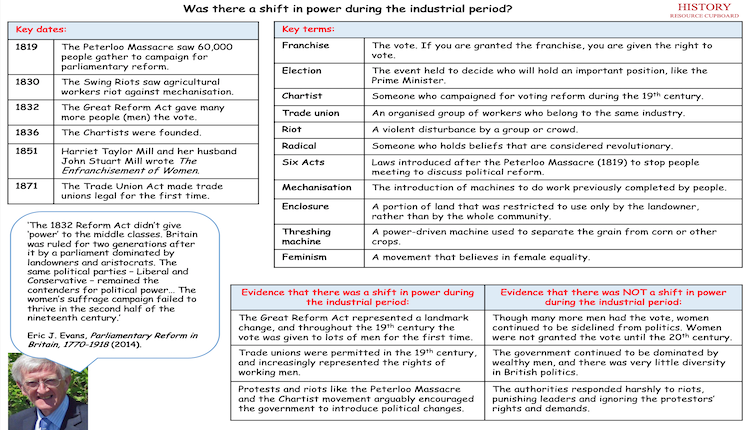
Download this knowledge organiser for this unit focusing on shifting power in the Industrial Period. The unit provides you with enquiries showing how power shifted in this period. There is an overview which asks your students to asses to what extent the shifts in power were a result of protest[…]
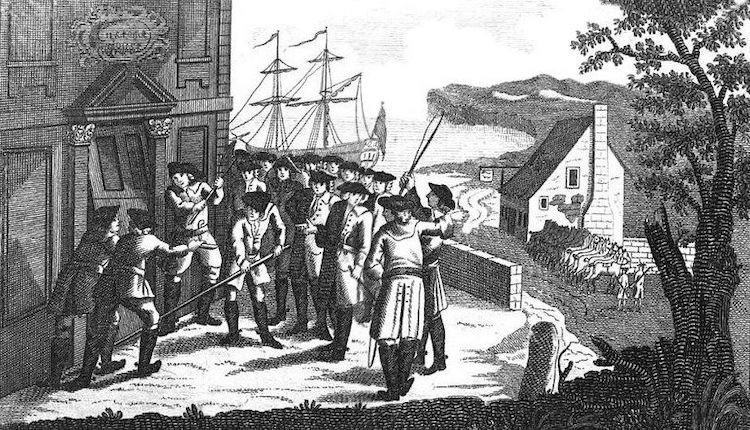
This enquiry starts with the gruesome, bloody murder of two men from Southampton. Daniel Chater and William Galley were beaten and stoned to death in 1748. Students are tasked with suggesting why such a murder might have taken place? What had Chater and Galley done to upset their murderers so[…]
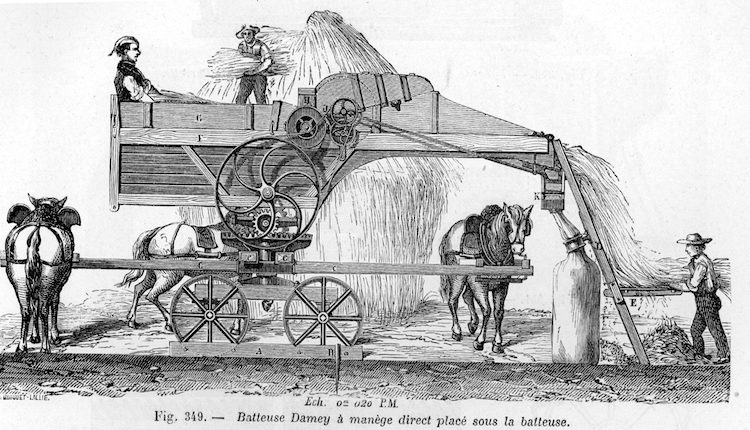
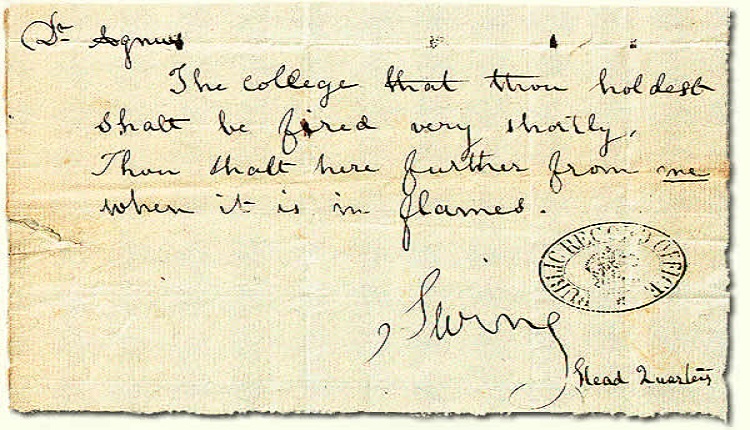
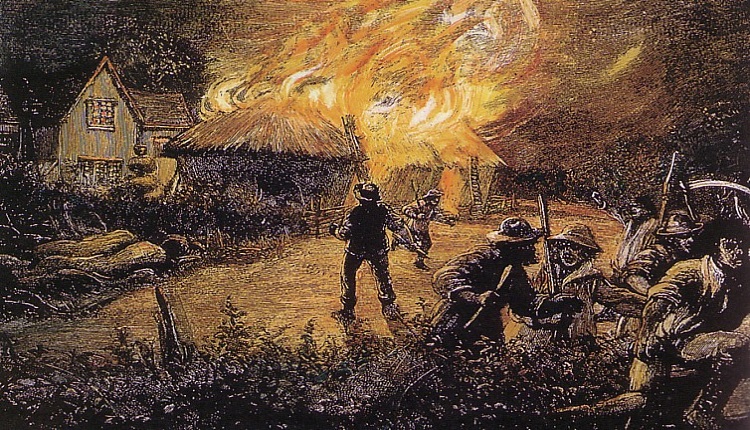
This active enquiry get students to put themselves in the shoes of the Swing Rioters. It asks them to work out how they might have responded to the circumstances facing agricultural labourers in the early 19th century. Students work through a number of decisions, before learning how ordinary people actually[…]
Updated for 2021 In this clever enquiry you will get your students to analyse difficult yet accessible primary evidence. They will use three sets of data (in map form) to decide whether or not they agree with a professor’s view of the causes The Swing Riots. This tried and tested[…]
Here you use the power of the personal story to help your students find out why two brothers led the Swing Riots in the small village of Bullington. You will use a mystery approach activity to get your students thinking hard. They will sort and classify information before making sense of it.[…]
This enquiry starts with the story of Henry Ayling, a gamekeeper working on a big estate in the 19thcentury. Ayling reported an increase in debts in the periods 1830-1. Students are asked to speculate about why this might have been. The enquiry reveals that this debt came from an increase[…]
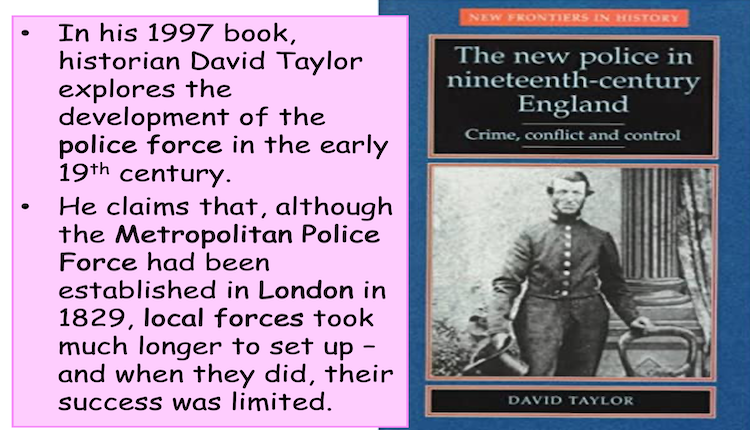
This enquiry focuses on local policing in the 19th century. It sees students encounter an historian’s interpretation about the effectiveness of local policing. David Taylor argues that local policing was characterised by a ‘limited degree of progress’. Having come up with some criteria to judge ‘progress’, students then study a[…]
This enquiry encourages students to reflect on the different punishment methods used in the 18th to 20th centuries. It takes an overview approach. The enquiry begins with the story of Elizabeth Lavender, who was executed for infanticide in 1799. It then introduces a range of other punishment methods used during[…]
Download this free knowledge-rich plan for a 5 enquiry study into Ordinary Lives in the Industrial Period. This fits into our coherent Key Stage 3 curriculum. The free downloadable scheme provides you with the core knowledge each lesson delivers and the first-order concepts / key terms each lesson will focus[…]
This enquiry is great for practising the application of significance criteria. It also helps students to understand that the feminist movement did not begin with the suffragettes in the early 20th century. Campaigners like Harriet Taylor Mill and Annie Besant were fighting for causes like enfranchisement, divorce and property rights[…]
Download this substantive knowledge test the unit on Power in the Industrial Period. It tests your students’ core knowledge from this unit of work. Use it alongside an end product from one of the enquiries in this unit to provide you with assessment information about your students substantive and disciplinary[…]
This enquiry provides an overview of some of the major developments of the Victorian period. To really give students a feel of the Victorian psyche, students are introduced to Aristotle. Aristotle was a much-loved philosopher during the Victorian period. This obsession reflects the broader Victorian preoccupation with the ancient world.[…]
This enquiry takes the form of a game. Students become industrial workers, and are tasked with maintaining (or improving) their financial position in society during a year in the life of an industrial worker. This is a fun way of developing students’ understanding of the period. They will encounter some[…]
This enquiry focuses on the use of child labour in the nineteenth century. It uses the classic interpretation of historian E.P. Thompson to explore this darker side of industrial progress. Thompson contends that the ‘exploitation’ of child workers was ‘one of the most shameful events in our history’. Students are[…]
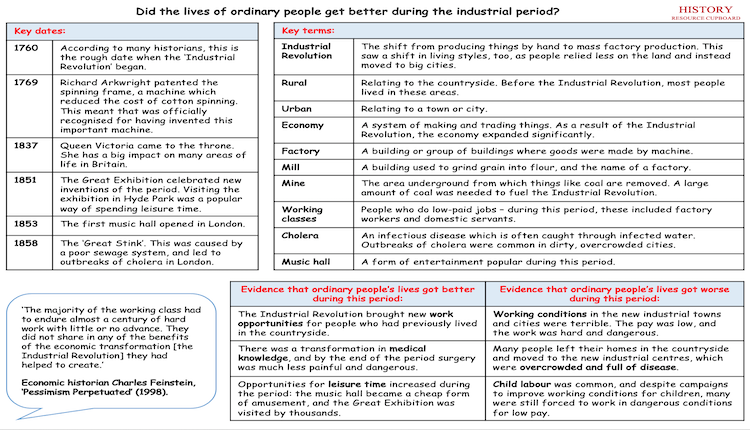
Download this knowledge organiser for this unit focusing on ordinary lives in the Industrial Period. The unit is centred around the question: Did ordinary lives get better in the industrial period? This knowledge organiser provides your students with the core substantive knowledge they will need to know to be successful[…]
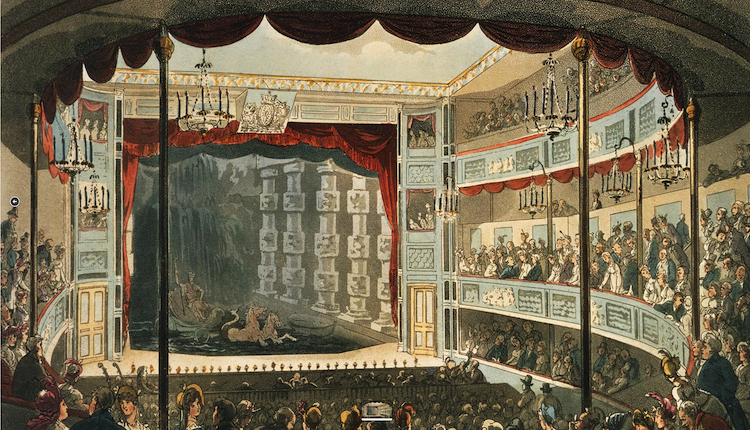
This enquiry focuses on an area of industrial life that is often neglected, in favour of the larger narratives of change and progress. It focuses on popular amusement, and the impact of the new entertainment form offered by music halls. Here you will use music hall entertainment as a ‘way[…]
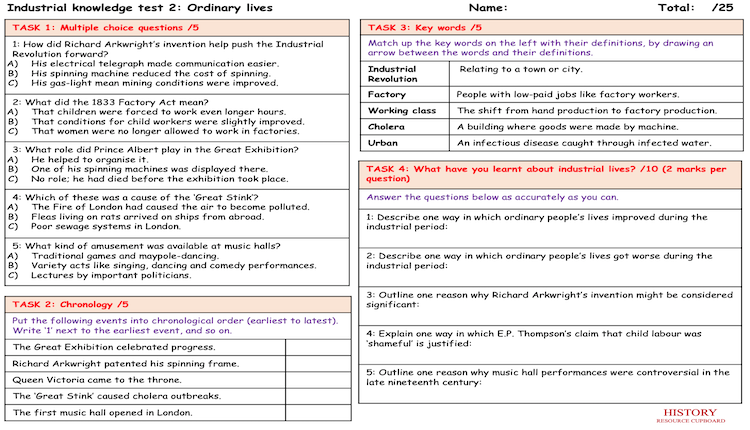
Download this substantive knowledge test the unit on Ordinary Lives in the Industrial Period. It tests your students’ core knowledge from this unit of work. Use it alongside an end product from one of the enquiries in this unit to provide you with assessment information about your students substantive and[…]
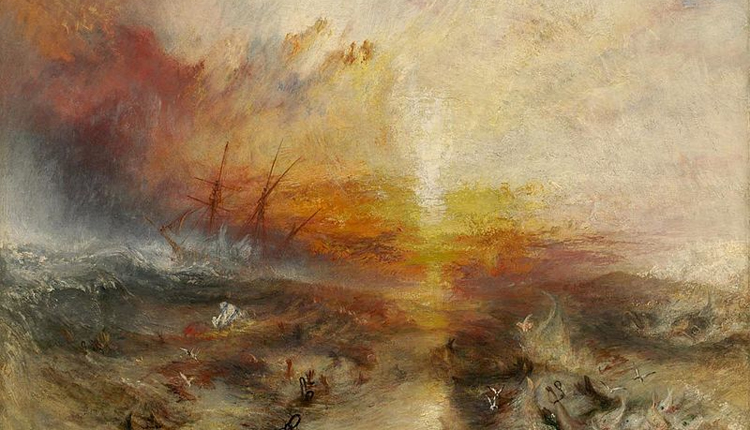
Exemplifying our approach to enquiry, this lesson uses the hook of a Turner painting and the story of events on the Zong to encourage students to tackle their ahistorical tendencies.
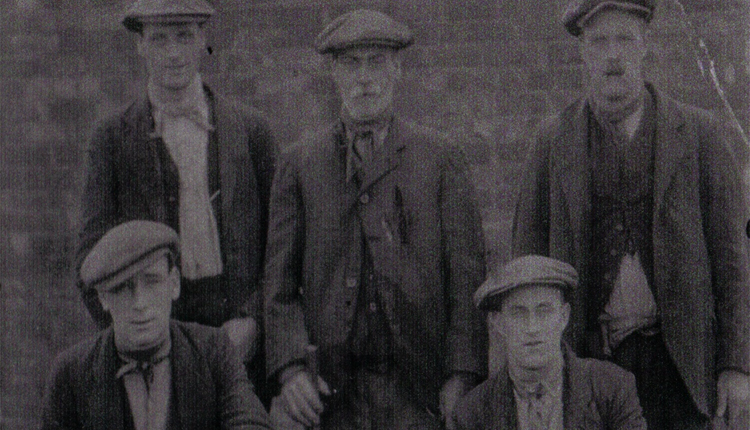
Using the personal story of a Durham miner, this enquiry allows students to evaluate the impact of government legislation on the lives of those it was meant to protect.
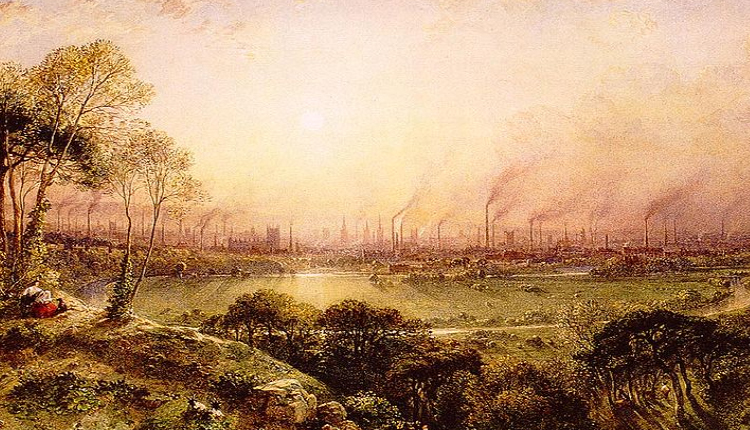
Using a personal story to understand understand a trend during the Industrial Revolution: migration from rural districts to the rapidly expanding towns
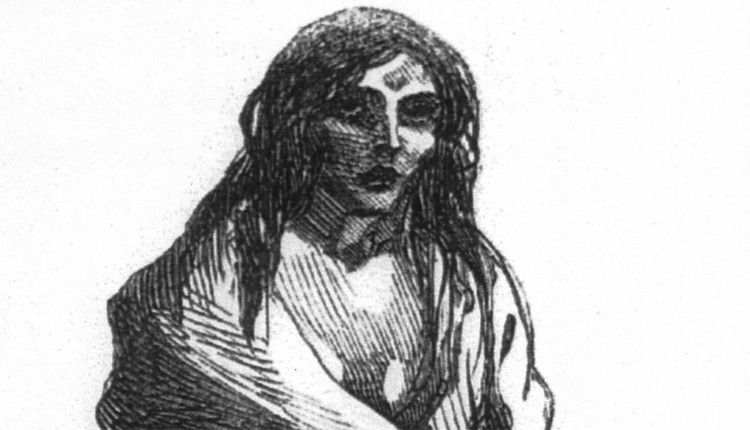
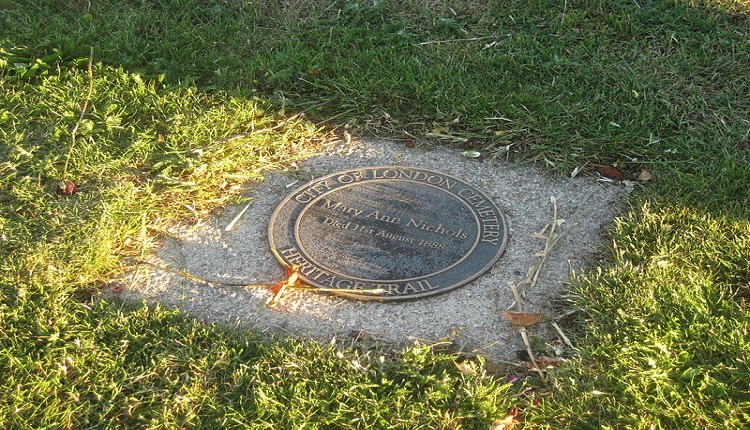
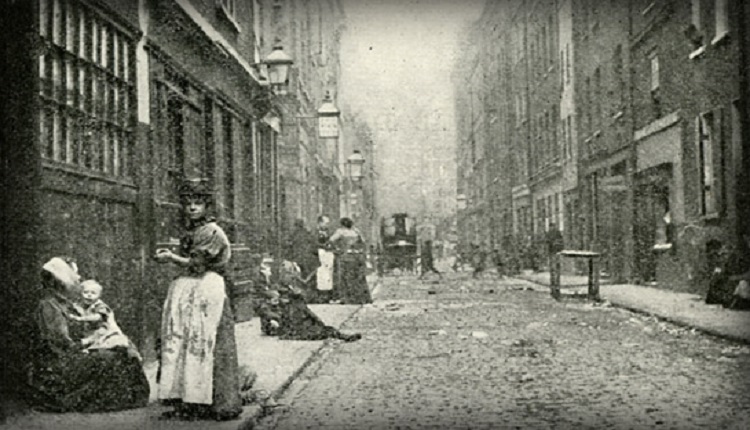
In this enquiry your students will engage the stories of the victims of Jack the Ripper to make inferences about Jack and the conditions in Whitechapel. Next, your class will consider what sources an historian might use to answer the big question – a key aspect of how this unit will be[…]
You can recommend this post to several users by putting 1 email on each line
We use cookies to ensure that we give you the best experience on our website. If you continue to use this site we will assume that you are happy with it.